Consejos
La postura empieza en los pies: su relación con el dolor de rodilla y espaldaPosture starts with your feet: the link with knee and back painHaltung beginnt bei den Füßen: der Zusammenhang mit Knie- und Rückenschmerzen
Pensamos en los pies solo cuando duelen, pero son la base de todo el cuerpo. Cada vez que apoyamos, el pie se adapta al suelo y envía información al sistema nervioso para que el cuerpo mantenga el equilibrio. Si ese apoyo no es el adecuado, el resto del cuerpo compensa.
Una cadena que sube desde el suelo
Pie, tobillo, rodilla, cadera y columna funcionan como una cadena. Un apoyo desequilibrado puede hacer que la rodilla gire más de la cuenta, que la pelvis se incline o que la espalda tenga que trabajar más para mantenernos erguidos. Con el tiempo, esas compensaciones pueden traducirse en molestias de rodilla o de espalda.
Señales a las que prestar atención
- Desgaste desigual de la suela de los zapatos.
- Dolor de rodilla o lumbar que aparece al caminar o estar de pie.
- Sensación de cansancio en las piernas o de inestabilidad.
- Sobrecargas que se repiten aunque descanses.
Qué es un estudio postural
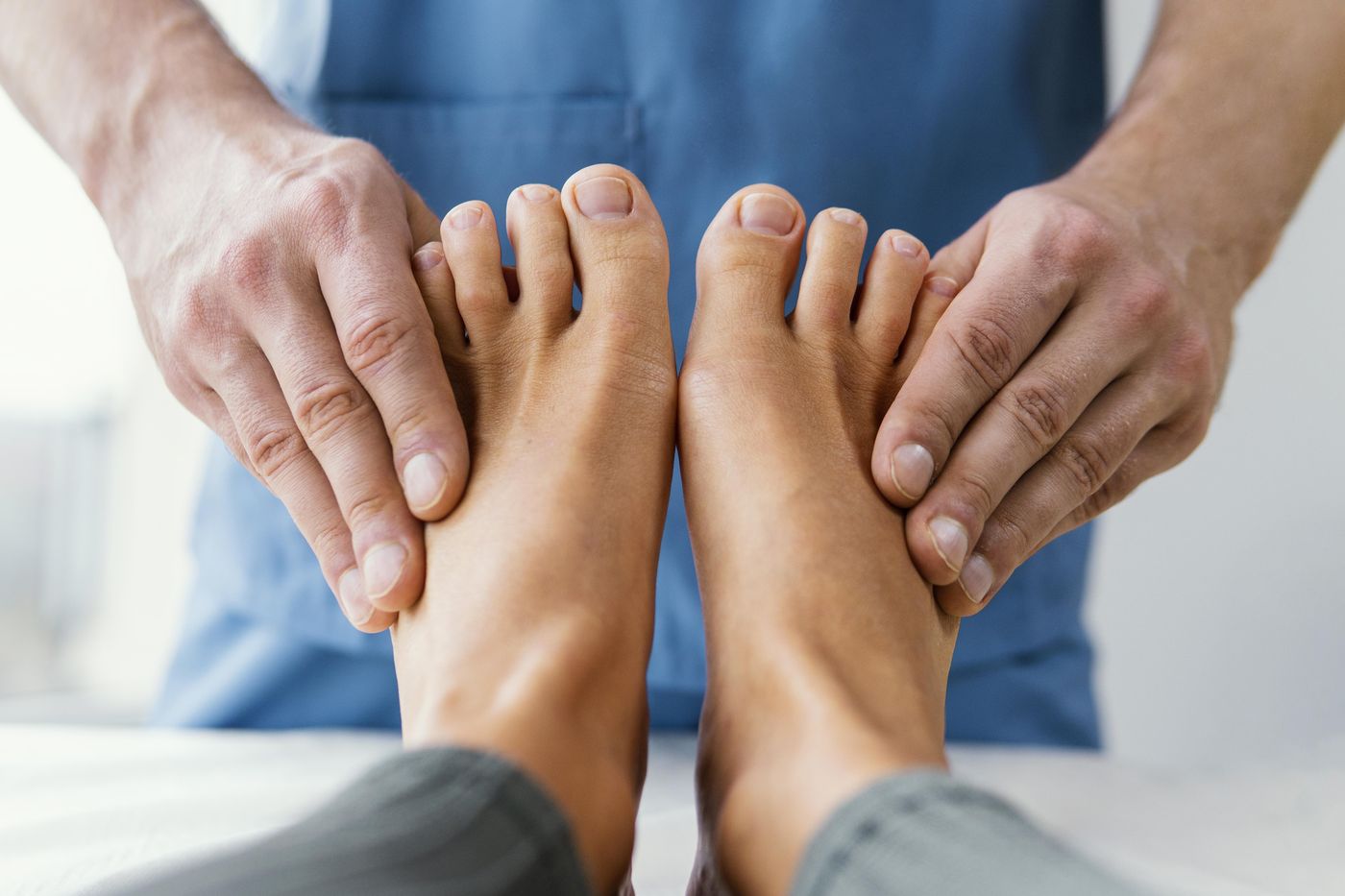
En un estudio postural y biomecánico observamos cómo apoyas los pies, cómo caminas y cómo se organiza tu postura de pie. Con un enfoque somato-sensorial, valoramos también cómo responde tu cuerpo a los estímulos que recibe a través del pie. A partir de ahí, proponemos el tratamiento que mejor se adapta a ti, que puede incluir plantillas posturales a medida.
Pies, postura y emociones
La postura no es solo mecánica: el estrés, el cansancio o el estado de ánimo también se reflejan en cómo nos sostenemos. Por eso, en consulta escuchamos tu historia completa y no solo el síntoma.
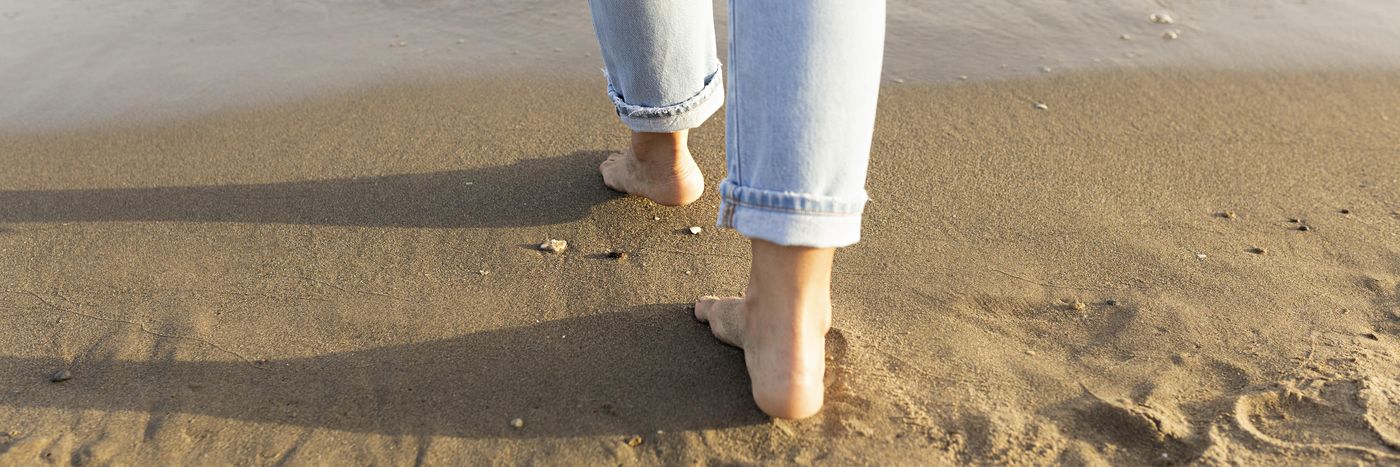
Caminar descalzo por superficies naturales, como la arena, es un buen estímulo para los pies. Si tienes dolor, consúltanos antes de cambiar tus hábitos.
¿Quieres saber cómo influyen tus pies en tu postura? Solicita tu estudio postural.
Este artículo es informativo y no sustituye una valoración profesional.
We only think about our feet when they hurt, but they are the foundation of the whole body. Every time we step, the foot adapts to the ground and sends information to the nervous system so the body can stay balanced. If that support isn't right, the rest of the body compensates.
A chain that rises from the ground
Foot, ankle, knee, hip and spine work as a chain. Unbalanced support can make the knee rotate more than it should, the pelvis tilt, or the back work harder to keep us upright. Over time, these compensations can turn into knee or back discomfort.
Signs to look out for
- Uneven wear on the soles of your shoes.
- Knee or lower back pain that appears when walking or standing.
- Tired legs or a feeling of instability.
- Recurring overload even when you rest.
What is a postural study?
In a postural and biomechanical study we observe how your feet bear weight, how you walk and how your posture is organised when standing. With a somatosensory approach, we also assess how your body responds to the stimuli it receives through the foot. From there, we propose the treatment that best suits you, which may include custom postural insoles.
Feet, posture and emotions
Posture isn't purely mechanical: stress, tiredness and mood are also reflected in how we hold ourselves. That's why, in clinic, we listen to your whole story and not just the symptom.
Walking barefoot on natural surfaces, such as sand, is a good stimulus for the feet. If you have pain, check with us before changing your habits.
Would you like to know how your feet affect your posture? Request your postural study.
This article is for information only and does not replace a professional assessment.
An unsere Füße denken wir meist erst, wenn sie schmerzen – dabei sind sie das Fundament des ganzen Körpers. Bei jedem Schritt passt sich der Fuß dem Boden an und sendet Informationen an das Nervensystem, damit der Körper im Gleichgewicht bleibt. Stimmt diese Basis nicht, gleicht der restliche Körper aus.
Eine Kette, die vom Boden aufsteigt
Fuß, Sprunggelenk, Knie, Hüfte und Wirbelsäule funktionieren wie eine Kette. Eine unausgewogene Belastung kann dazu führen, dass sich das Knie stärker dreht als vorgesehen, das Becken kippt oder der Rücken mehr arbeiten muss, um uns aufrecht zu halten. Mit der Zeit können sich diese Ausgleichsbewegungen als Knie- oder Rückenbeschwerden bemerkbar machen.
Anzeichen, auf die Sie achten sollten
- Ungleichmäßig abgenutzte Schuhsohlen.
- Knie- oder Kreuzschmerzen beim Gehen oder Stehen.
- Müde Beine oder ein Gefühl von Unsicherheit.
- Überlastungen, die trotz Ruhe immer wiederkehren.
Was ist eine Haltungsanalyse?
Bei einer Haltungs- und biomechanischen Analyse beobachten wir, wie Ihre Füße belastet werden, wie Sie gehen und wie sich Ihre Haltung im Stehen organisiert. Mit einem somatosensorischen Ansatz beurteilen wir außerdem, wie Ihr Körper auf die Reize reagiert, die er über den Fuß erhält. Darauf aufbauend schlagen wir die Behandlung vor, die am besten zu Ihnen passt – zum Beispiel maßgefertigte Haltungseinlagen.
Füße, Haltung und Emotionen
Haltung ist nicht nur Mechanik: Stress, Müdigkeit und Stimmung spiegeln sich ebenfalls darin wider, wie wir uns halten. Deshalb hören wir uns in der Praxis Ihre ganze Geschichte an und nicht nur das Symptom.
Barfußgehen auf natürlichen Untergründen wie Sand ist ein guter Reiz für die Füße. Wenn Sie Schmerzen haben, sprechen Sie vor einer Umstellung Ihrer Gewohnheiten mit uns.
Möchten Sie wissen, wie Ihre Füße Ihre Haltung beeinflussen? Fragen Sie Ihre Haltungsanalyse an.
Dieser Artikel dient nur der Information und ersetzt keine professionelle Untersuchung.